tea-story

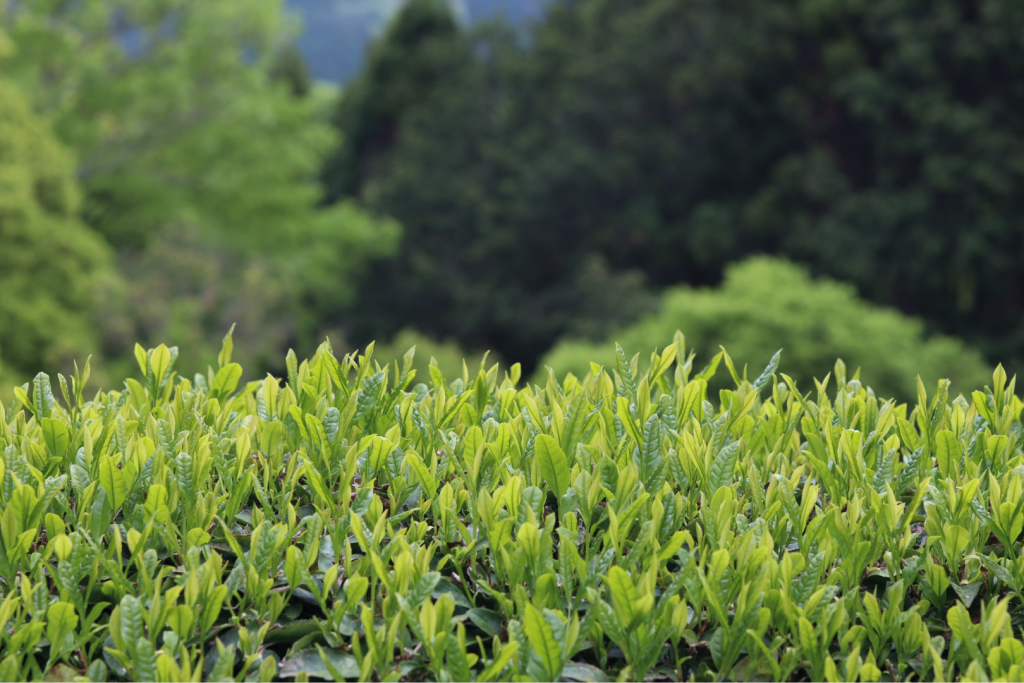
Before modern tea cultivars like Yabukita became widespread in the 1970s, Japan’s tea fields were dominated for more than 700 years by tea grown from seed — known as Zairai (在来).
Unlike modern cultivars, Zairai tea is not a clone. Each tree is genetically unique, and its roots grow deep into the earth, forming a strong taproot that can live for hundreds of years.
However, as the Japanese tea industry became increasingly mechanized and efficiency-driven, Zairai gradually disappeared. Its uneven growth, differences in leaf shape and color, and difficulty in mechanical harvesting made it less suitable for modern tea production.
Today, only around 1% of Japan’s tea fields are believed to remain Zairai.
Kyoto once had an exceptionally high proportion of Zairai tea. In 2012, it accounted for about 12% of tea-growing land in the prefecture, compared with only 3–5% in many other tea-producing regions. By 2025, however, that figure had fallen to just 3.48%.
Kyoto’s abundance of Zairai is thought to be connected to its long history as an ancient tea-growing region and its many mountainous areas, where the transition to modern cultivars happened more slowly.
We believe these old trees offer something that cannot be recreated by simply planting a modern cultivar.
Their deep roots reach into the underlying soil, drawing minerals and nutrients from the land itself. This creates a distinctive sense of place — complex aromas, depth, and a powerful structure that reflects the soil and environment where the tea has grown.
We have revived centuries-old Zairai tea trees that had been abandoned for years, dating back to the era of Nagatani Soen, the founder of modern sencha.
From these ancient trees, we hand-pick and craft sencha in the traditional way.
Our handpiced sencha, “百年樹のしずく,” carries the Jika — the deep, earthy “sense of place” once treasured in the Uji tea region.
Experience the taste of tea rooted in the land, rather than simply produced from a cultivar.


Sencha
Ancient Sencha Handpicked
¥5,280
 Clean
Aromatic
Sencha made from Uji zairai tea trees estimated to be over 100 years old, grown in Ohbukudani. It is known for its rich aroma and a clean finish without harshness.


 tea-story