Terroir
Uji tea once had an aroma distinguishable from that of every other region: Hotoro-ka and 下木香. It was not the aroma of a cultivar, but of the land itself.
テスト
テストテスト
What is Hotoro-ka?
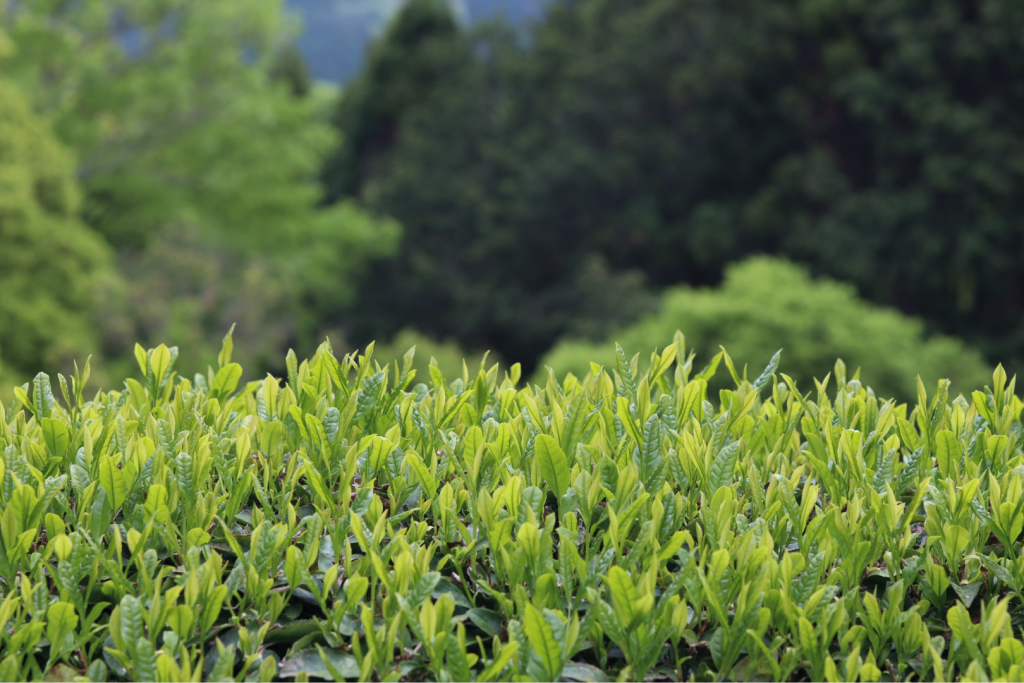
Yuyadani in Ujitawara, the birthplace of sencha, was also long known as one of the most aromatic areas for mountain-grown tea. The wind that constantly blows through the valley surrounds the tea bushes and protects them from frost. Annual rainfall is around 1,000 millimeters, exceptionally low for a Japanese tea-growing region.
Because the tea bushes grow slowly, their aroma and flavor become concentrated, producing a rich taste. In Uji, this aroma unique to the land has long been called jikō.
Jikō
A term for the distinctive aroma that a place’s soil, climate, and topography impart to tea leaves, rather than the aroma of a cultivar. It is a concept similar to terroir in wine; in Uji, Hotoro-ka and 下木香 are examples.
Source: 城州ゆたに 山口製茶処
Choosing zairai tea
Zairai tea grows from seed. Unlike cultivars propagated from cuttings, each bush is a distinct individual whose roots extend deep into the ground. Differences in soil and climate appear directly in the aroma.
However, no two bushes grow in the same way, and they cannot be harvested by machine. As tea cultivation became mechanized and cultivars spread, zairai fields almost disappeared. Hotoro-ka faded with them.
Once again, after half a century
Our fields still contain zairai bushes believed to be more than 200 years old. We pick them by hand and use neither fertilizers nor pesticides. Yields are small, and the flavor changes from year to year.
In return, the aroma remains, infusion after infusion. Hotoro-ka is at its most expressive in the second infusion.


 Journal